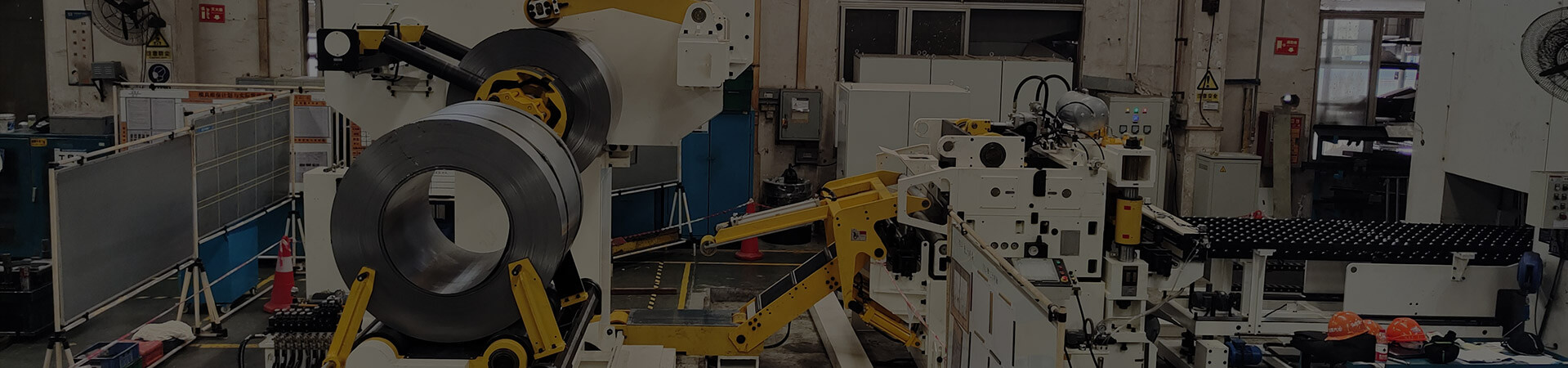
Straightener
SUNRUI manufactures a comprehensive range of precision straightener machines (also known as sheet levelers or flattening machines) designed to eliminate coil curvature, edge wave, and material distortion from metal strips. By passing the material through a series of hardened straightening rollers—typically arranged in upper and lower banks—our machines deliver consistently flat, stress-relieved sheet stock for downstream stamping, blanking, and forming operations.
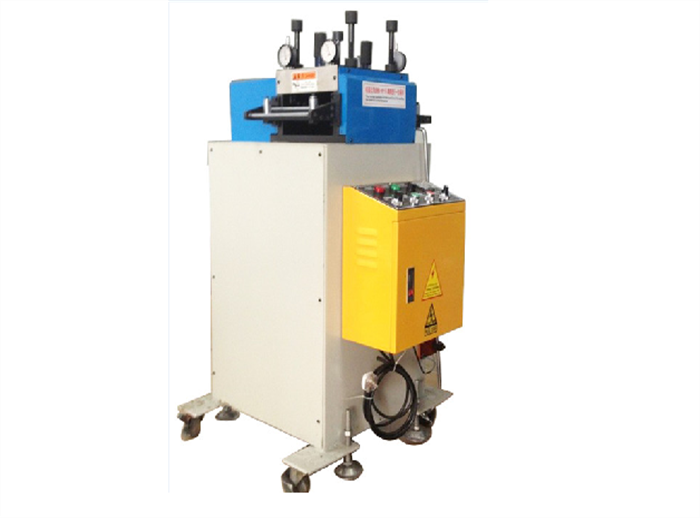
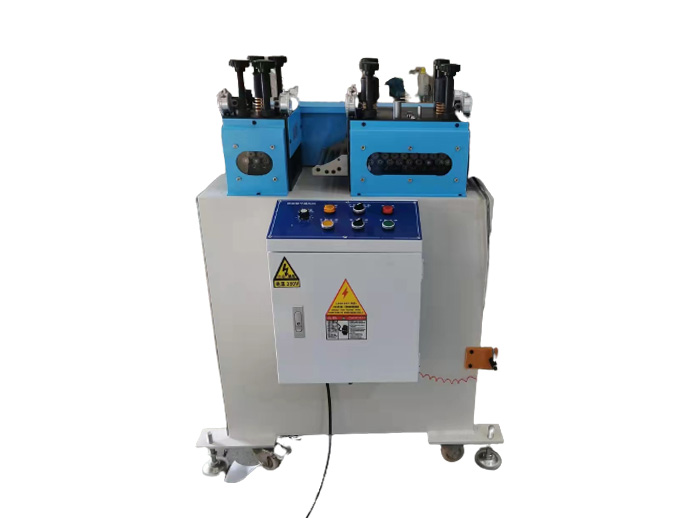
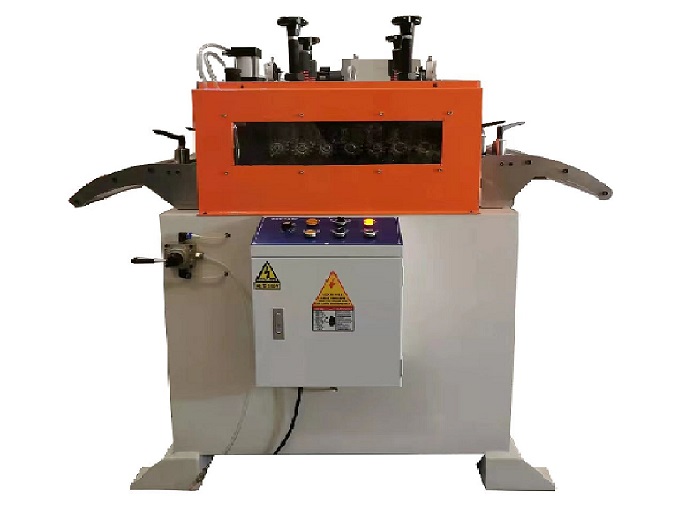
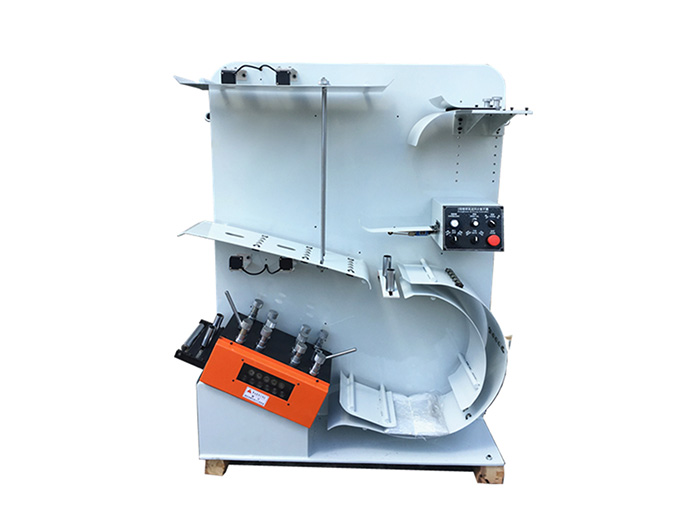
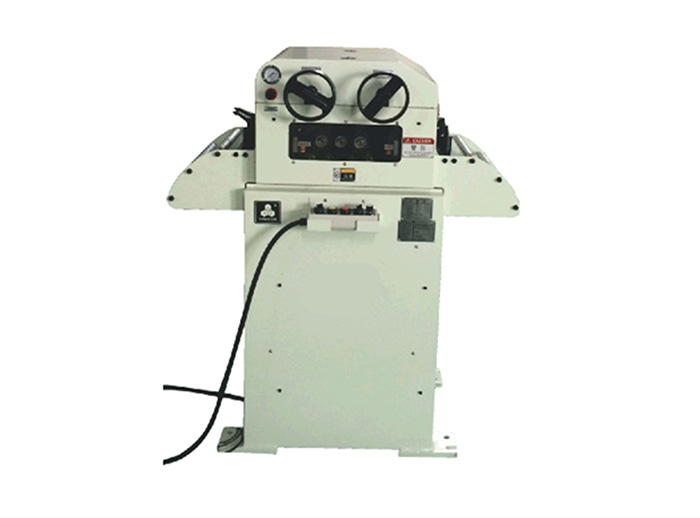
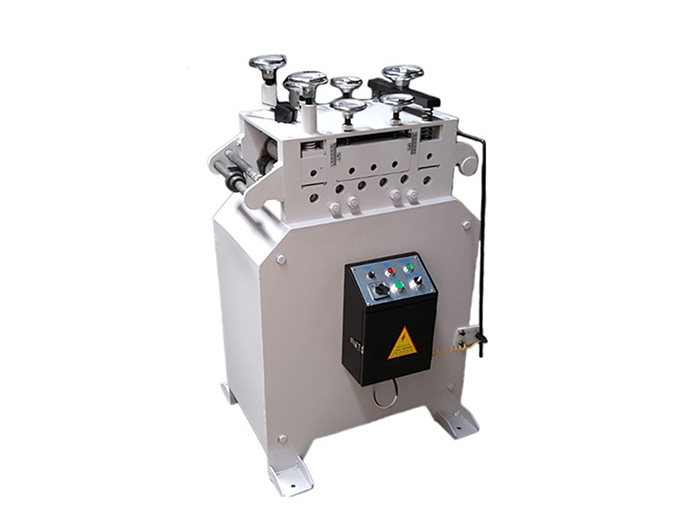
Precision Straightener Machines | Metal Coil Leveling Solutions from SUNRUI
The Straightening ProcessSUNRUI straightener machines operate through two stages:
Rough straightening section: Larger rollers perform the initial flattening, removing major coil set and curvature.
Precision straightening section: Smaller rollers refine the flatness to tight tolerances, essential for high-precision progressive die stamping.
Core Advantages
High Precision
Achieves tight flatness tolerances suitable for electronic components, mobile phone parts, PC accessories, and other precision stamping applications requiring exceptional accuracy.Dual-End Straightening
Performs flattening across the entire material length, ensuring consistent flatness from leading edge to trailing edge.
Versatile Material Compatibility
Handles a wide range of materials including galvanized steel, stainless steel, CR steel, HR steel, aluminum, and copper.
Robust Construction
Straightening rollers are manufactured from solid bearing steel (GCr15), heat-treated to HRC58-60, hard-chrome plated, and precision-ground for extended service life and consistent performance.
Explore Our Straightener Series:
STL Series – Ultra-Precision Thin-Gauge Straighteners (0.1-0.6mm)
Ideal for electronics, mobile phone accessories, PC components, and digital parts stamping. Features 19 straightening rollers (9 upper/10 lower) achieving ±0.1mm flatness accuracy.
HS-A Series – Medium-Gauge Straighteners (0.4-4.5mm)
Versatile straightening for hardware components, appliance parts, and furniture hardware. Adjustable roller pressure with fine-tuning handwheel for precise thickness control.
HS-B Series – Heavy-Gauge Straighteners (1.0-6.0mm)
Heavy-duty straightening for automotive parts, motorcycle components, and structural stamping. Designed for higher-strength materials and thicker gauges.
Choose the Right Straightener for Your Stamping Line | SUNRUI MACHINE
Material flatness is the foundation of quality stamping. A properly straightened coil eliminates misfeeds, reduces die wear, minimizes scrap, and ensures part consistency. SUNRUI straightener machines are engineered to match your specific material thickness, width, and precision requirements.
Key Straightening Performance Factors
Roller Configuration
SUNRUI straighteners typically feature a two-stage roller arrangement: a rough straightening section with larger-diameter rollers for initial flattening, followed by a precision section with smaller rollers for fine leveling. The standard configuration includes 19 rollers (9 upper, 10 lower) for optimal flatness control.
Drive & Control
Independent Universal Joint Drive: Eliminates gear transmission wear, providing smoother operation and better straightening performance.
Inverter Speed Control: Allows variable-speed adjustment for optimal feeding coordination with downstream equipment.
Electronic Loop Sensor: Maintains automatic loop control for consistent material tension
Operation Modes
Manual Mode: Forward/reverse feeding for trial straightening and setup verification.
Automatic Mode: Synchronized operation with servo feeder and press for continuous production.
How to select the right straightener:
| Parameter | Criteria |
|---|---|
| Material Thickness | Choose series based on gauge range: STL (0.1-0.6mm) / HS-A (0.4-4.5mm) / HS-B (1.0-6.0mm) |
| Material Width | Match straightener width capacity to your coil width |
| Material Type | High-strength steel up to 1500 MPa requires additional roller strength |
| Required Flatness | Precision electronics need tighter tolerances; general stamping has more flexibility |
Key Applications by Industry:
Electronics & Digital Parts
Mobile phone accessories, PC components, connectors, and terminals require ultra-precision straightening for defect-free stamping.
Automotive
Body panels, structural components, and high-strength steel parts demand consistent flatness for die protection and part quality.
Appliance Manufacturing
Refrigerator panels, washing machine components, and air conditioner cabinets need surface-quality flatness for cosmetic finishes.
Construction & Hardware
Structural beams, profiles, and hardware components benefit from reliable straightening of thicker, higher-strength materials.
Metal Recycling & Processing
Straighteners prepare reclaimed coils for reprocessing and further forming operations.
SUNRUI Straightener Machine – Frequently Asked Questions
Q: What does a coil straightener machine do?
A: A coil straightener machine (also called a sheet leveler or flattening machine) removes defects from metal coils—such as warping, coil set, waves, and surface irregularities—that occur during production, transportation, and storage. By passing the material through staggered straightening rollers, the machine alternately stretches and compresses the metal past its yield point until both upper and lower surfaces have the same length, producing a consistently flat strip for downstream stamping, blanking, or forming operations.
Q: What is the difference between a straightener and a leveler?
Coil Straightener: Primarily removes coil set (curvature from being wound) and crossbow (curvature across the strip width). It corrects surface-to-surface stress but cannot fix uneven lengths across the strip.
Leveler: Provides more advanced flattening. A leveler can remove coil set and crossbow like a straightener, but can also correct edge wave and center buckle—length differences across the strip width. Levelers use more closely spaced rollers and can flex under load to stretch specific areas of metal, equalizing stress and producing a flatter strip.
For most stamping applications, a straightener is sufficient. For ultra-precision applications (electronics, aerospace) or materials with edge wave issues, a leveler may be required.
Q: What is the difference between a standard straightener and a precision straightener?
A: This is one of the most common questions in the industry. While the terms are often used loosely and interchangeably, there is a technical distinction:
| Feature | Standard Straightener | Precision Straightener |
|---|---|---|
| Roller Diameter | Larger | Smaller |
| Roller Configuration | Fewer rollers | More rollers, closer spacing |
| Capability | Removes major coil set and waves | Removes fine waves and warping |
| Applications | Mass production, general stamping | Automotive, electronics, high-precision stamping |
| Output Flatness | Good | Superior |
Precision straighteners are ideal for thin sheets or high-strength materials requiring tight flatness tolerances.
Selection & Sizing
Q: How do I choose the right straightener for my material?
A: Selecting the right straightener depends on several key factors:
Material Thickness: Thicker materials require more powerful straighteners with larger roller diameters. SUNRUI offers straighteners ranging from 0.1mm (STL series) to 6.0mm (HS-B series).
Material Width: The straightener width capacity must match your coil width.
Material Type and Strength: High-strength steel (HSS) up to 1500 MPa requires heavy-duty construction and higher straightening force.
Required Flatness: Precision electronics stamping needs tighter tolerances than general hardware stamping.
Coil Weight: Heavier coils require more robust feeding and straightening systems.
For a tailored recommendation, please provide these specifications to our engineering team.
Q: Can SUNRUI straighteners handle high-strength steel (HSS)?
A: Yes. SUNRUI HS-B series and 3-in-1 compact feed lines are engineered to process high-strength steel with tensile strength up to 1500 MPa and thickness up to 6.0mm. For HSS applications, heavy-duty construction, hardened rollers (HRC58-60), and proper roller gap settings are essential to achieve consistent flatness without damaging the material or the equipment.
Q: Do I need a separate straightener or a 2-in-1/3-in-1 integrated system?
A: This depends on your facility and production requirements:
Separate Straightener: Offers maximum flexibility. You can upgrade or replace individual components independently. Ideal for existing lines where space is not a constraint.
2-in-1 (Decoiler + Straightener) or 3-in-1 (Decoiler + Straightener + Feeder): Saves up to 40% floor space, simplifies setup, and reduces material handling between processes. Ideal for new line installations or facilities with limited space.
Operation & Maintenance
Q: How do I adjust the roller gap on a straightener?
A: Proper roller gap adjustment is critical for achieving optimal straightening performance:
Rough Adjustment: Set the roll gap according to the material thickness. A common starting point is material thickness + (0.2–0.5mm).
Fine Adjustment: Feed a short test piece (e.g., 300mm) through at low speed.
If the material exits with reverse arching: The rolls are too tight. Raise the handwheel 1–2 clicks.
If warping in the original direction persists: The rolls are too loose. Press down symmetrically one click further.
Repeat 2–3 times until you find the "zero stress" inflection point where the material exits flat.
For SUNRUI straighteners, the worm gear adjustment mechanism with dial gauge allows quick, accurate positioning.
Q: What is the recommended maintenance schedule for a straightener?
A: Regular preventive maintenance extends equipment service life and ensures consistent performance:
| Maintenance Task | Frequency |
|---|---|
| Roller surface cleaning | Daily (or after each shift) |
| Lubrication of moving parts | Daily/Weekly (manual oil pump) |
| Roller wear inspection | Weekly |
| Roller gap calibration | Weekly (high-precision) / Monthly (standard) |
| Bearing temperature check | Monitor during operation (>60°C indicates issue) |
| Electrical connection inspection | Monthly |
| Gearbox regreasing | Monthly |
| Full machine audit | Annually or when switching material types significantly |
Key precaution: Before starting the machine each day, check the roller surface for debris, welding slag, or rust. Foreign particles can damage rollers and leave pockmarks on the material surface.
Q: Why is my material not feeding smoothly?
A: Common causes and solutions:
Incorrect roll gap: Re-set roll gaps according to material thickness
Uneven roll pressure: Check pressure distribution across the width and adjust evenly
Worn or damaged rollers: Inspect for scratches, dents, or uneven surfaces—replace if necessary
Material exceeding machine capacity: Verify that thickness and width are within specification
Insufficient straightening passes: Reduce feed speed or increase number of passes
Q: What should I do if the machine makes abnormal noise or vibrates?
A: Uneven straightening usually results from:
Incorrect roll gap: Re-set roll gaps according to material thickness
Uneven roll pressure: Check pressure distribution across the width and adjust evenly
Worn or damaged rollers: Inspect for scratches, dents, or uneven surfaces—replace if necessary
Material exceeding machine capacity: Verify that thickness and width are within specification
Insufficient straightening passes: Reduce feed speed or increase number of passes
Q: How do I prevent roller marks on the material surface?
A: Roller marks are typically caused by:
Dirty or damaged rollers: Clean and polish regularly. Use a clean rag to wipe rollers before each shift.
Excessive roller pressure: Adjust pressure gradually, especially for soft or coated materials.
Foreign particles on the roller surface: Remove welding slag, sand, or rust before feeding material.
For coated materials: Consider using protective film or reducing pressure.
Important: Never feed material thicker than the machine's nameplate limit—this can permanently damage rollers.
Q: Does SUNRUI provide operator training?
A: Yes. SUNRUI provides comprehensive on-site operator training as part of our implementation service. Our technical engineers teach your team how to install, operate, and maintain the equipment—covering setup procedures, roller gap adjustment, troubleshooting, and preventive maintenance.
Q: What is the standard warranty on SUNRUI straighteners?
A: SUNRUI provides a 12-month warranty on standard equipment, with options for extended coverage. CE-certified components from global brands (Mitsubishi, Yaskawa, etc.) ensure long-term reliability and safety.