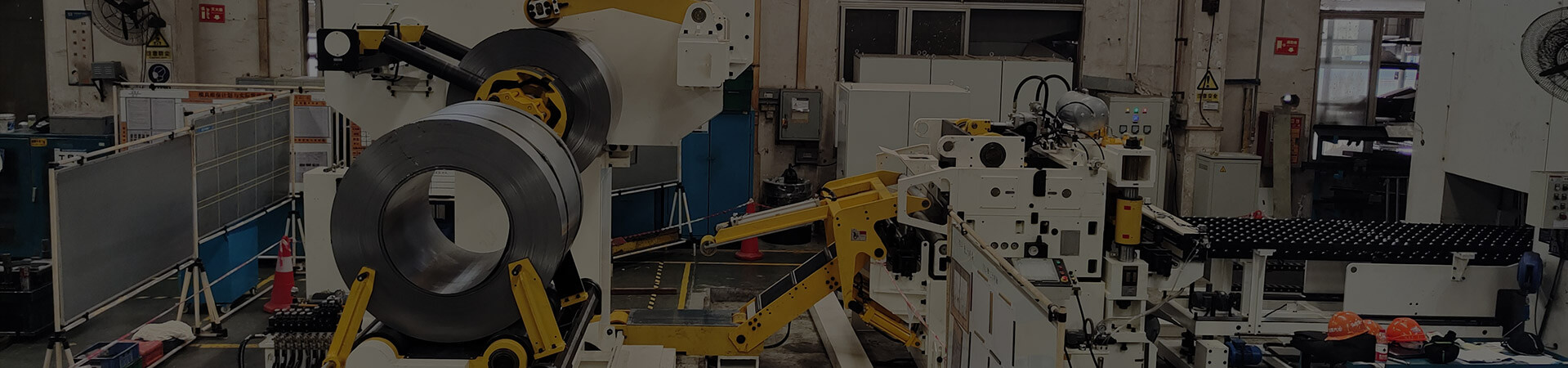
Feeder
A coil feeder is an automated device designed to precisely feed metal coil stock into a stamping press or other processing machinery. Its primary function is to ensure consistent material indexing—delivering the strip at the correct length and speed—which is fundamental to achieving high part quality, maximizing die life, and maintaining efficient production flow.
Modern coil feeders are equipped with advanced servo-driven motors and intelligent control systems, enabling precise speed regulation and repeatable feeding accuracy. They are capable of handling a wide variety of coil materials—including steel, aluminum, copper, and their alloys—across a broad range of thicknesses and widths. This versatility makes them indispensable in industries such as automotive, aerospace, electronics, and appliance manufacturing.
Types of Feeder Machines
Based on their driving mechanism, coil feeders are generally classified into three main types: mechanical, pneumatic, and servo (with hydraulic types available for specialized heavy-duty applications). Mechanical and pneumatic feeders are widely used in stamping operations due to their reliability and cost-effectiveness.
The pneumatic feeder is valued for its lightweight, compact design, rapid response, and easy adjustability for different material thicknesses and feed lengths. It is particularly well-suited for pre-feeding applications, small-batch production, and situations requiring frequent changeovers. However, its pneumatic operation can generate higher noise levels compared to other types
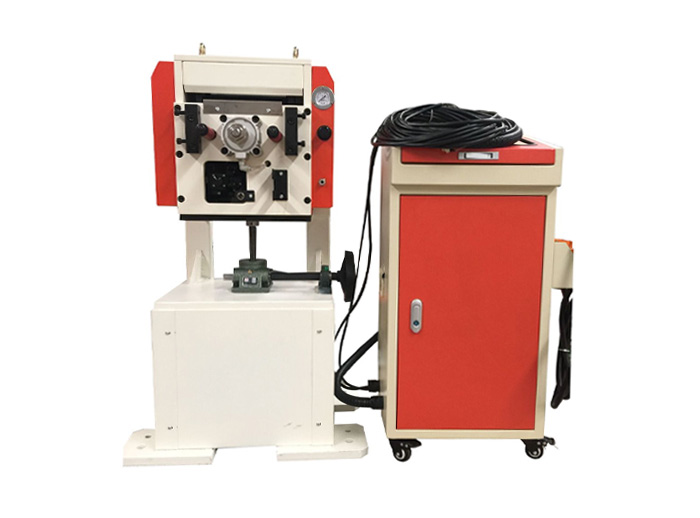
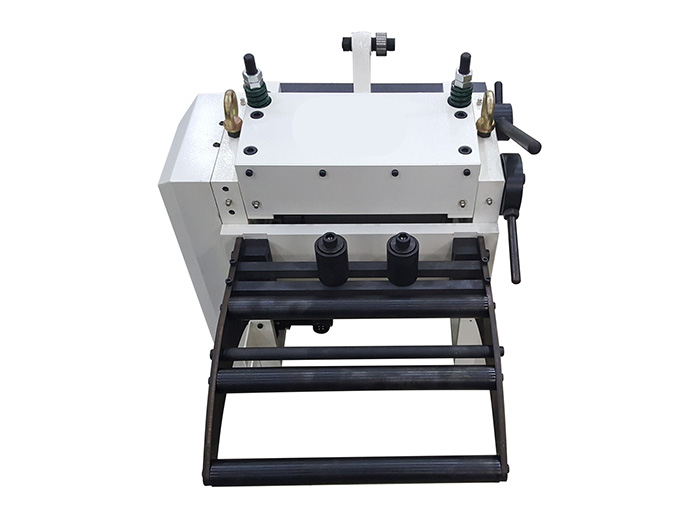
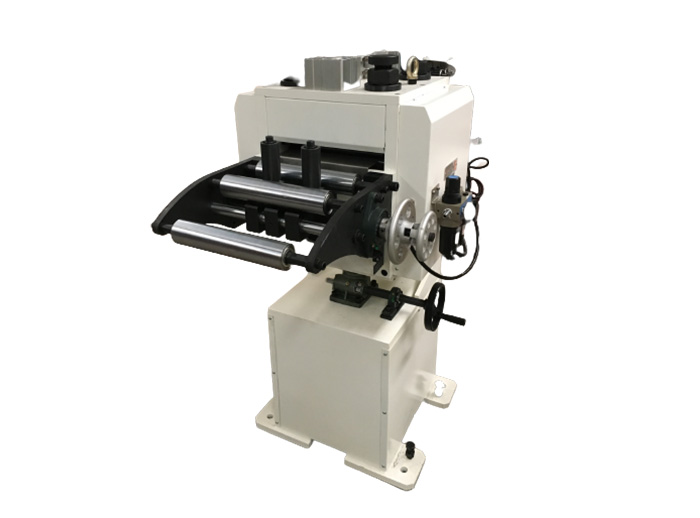
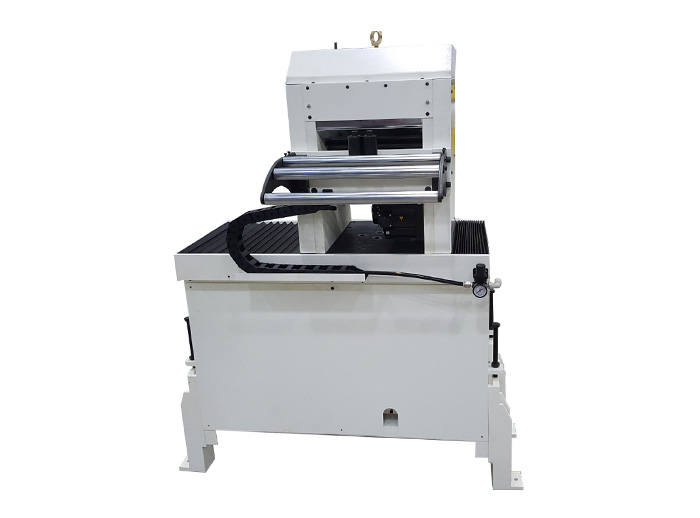
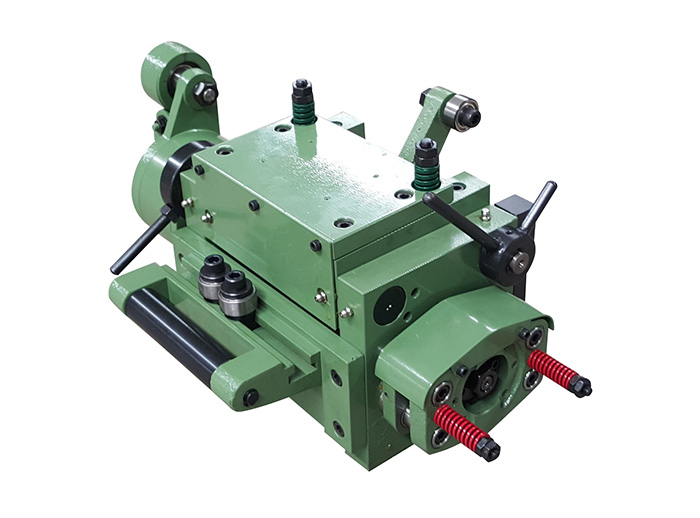
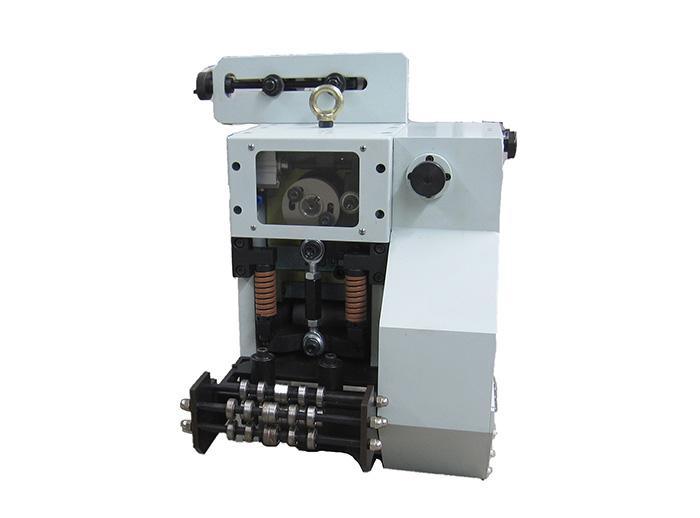

SUNRUI Feeders | Precision Feeding Solutions for Every Stamping Application
A feeder is the core component that ensures accurate and consistent material delivery into your stamping press. In modern stamping operations, the performance of the feeding mechanism directly affects the promotion and application of the entire production line. Therefore, selecting the right feeding mechanism according to the process requirements of the stamped parts and actual production conditions is essential for optimizing efficiency and quality.
What is a Feeder?
A coil feeder machine is a type of equipment used to feed metal coils into a stamping or press machine. It is designed to automatically feed the coil material into the machine, ensuring a consistent and accurate feeding process. Coil feeders come equipped with features such as servo-driven motors and advanced control systems, which help to provide accurate feeding and speed control.
SUNRUI offers a comprehensive range of coil feeding solutions—from high-speed servo feeders to specialized zigzag servo feeder and gripper feeders—engineered to meet the diverse demands of modern stamping operations. Our feeder systems are designed with advanced servo technology, robust construction, and user-friendly controls to deliver reliable performance across a wide range of materials, thicknesses, and production speeds.
Types of Feeder Machines
According to the different feeding power, feeder machines can be divided into 2 types: mechanical type, and pneumatic type.
The mechanical feeder is relatively more challenging to adjust, but it offers advantages such as accurate and reliable feeding, less impact and vibration, low noise, and good stability. It remains the most commonly used automatic feeding method in current stamping processing.
The pneumatic feeder is smart and light, versatile, and has adjustable feeding length and material thickness with quick response. However, it works by differential pressure pneumatic principles, which results in significant working noise that may affect the stamping environment. It is mainly used for pre-feeding and small-batch production.
Servo Feeder (SUNRUI's Core Strength)
The servo feeder is currently the most accurate and efficient feeding system available for metal processing. The motor drives the feed roller through a synchronous belt wheel, achieving precise feeding with accuracy up to ±0.15mm. The machine utilizes the release signal provided by the punch cam to release accumulated error through the cylinder, ensuring ultimate precision.
Why Choose SUNRUI Feeders?
Precision & Reliability
SUNRUI servo feeders achieve ±0.1mm feeding accuracy, powered by Yaskawa servo motors and Mitsubishi PLC controls . High-resolution encoders ensure consistent indexing, minimizing scrap and protecting expensive dies.
Smart Control
User-friendly HMI touchscreen allows operators to input up to 20 different feed lengths for flexible production runs. The control system integrates seamlessly with press cam signals for perfect synchronization .
Robust & Durable Construction
All feed rollers are manufactured from high-grade steel, heat-treated, hard-chrome plated, and precision-ground to HRC60-62° for extended service life. Gear-driven upper roll with anti-backlash features ensures non-slip, positive feeding .
Versatility
Our broad portfolio covers materials from 0.1mm thin foils to 6.0mm heavy plates, and widths from narrow strips to 1300mm wide coils .
Seamless Integration
Feeders are compatible with most press brands and can be easily integrated into new or existing stamping lines. A mounting plate can help the servo feeder install to press machine easily, or you can choose a separate bracket for better stability .
Global Support
CE certified, with full-service support including installation, training, and after-sales service
Applications
SUNRUI feeders are essential for a wide range of stamping applications across industries:
Automotive: Small auto parts, sensors, brackets, license plates, brake pads, seat components
Electronics & Hardware: Connectors, terminals, computer components, LED parts, radiators
Appliance Manufacturing: Components for air conditioners, refrigerators, washing machines
General Metal Stamping: Saw blade stamping, circle blanking, hardware stamping, motor stator and rotor production
Need Help Choosing the Right Feeder?
Selecting the optimal feeder depends on your material type, thickness, width, stamping speed, and die configuration. Contact our engineering team for a free application review and equipment recommendation.
Email: info@sz-sunrui.com
Phone: +86-13510169882
Contact our team today. We'll help you find the right feeder for your stamping line.
SUNRUI Coil feeder --- Frequently Asked Questions
Q: What is the difference between a servo feeder and a conventional roll feeder?
A: A servo feeder uses a programmable servo motor and PLC control to achieve ±0.15mm feeding accuracy and the ability to program multiple feed lengths (up to 20). Conventional mechanical or pneumatic feeders are less precise and harder to adjust for different lengths.
Q: How do I choose between the NCF and RNC series?
A: Choose the NCF series if your material thickness is between 0.1-1.6mm and width up to 400mm, especially for high-speed, precision stamping. Choose the RNC series if you need to handle thicker materials (0.3-6.0mm) and wider coils (up to 1300mm) for heavy-duty applications.
Q: Can these feeders be integrated with my existing press?
A: Yes. SUNRUI servo feeders can be mounted directly to your press via a mounting plate or installed with a separate bracket. They are compatible with most mechanical and hydraulic presses using standard synchronization interfaces.
Q: What is the feeding accuracy and speed?
A: Both NCF and RNC series achieve a repeatable feeding accuracy of ±0.15mm and a maximum feeding speed of 20 m/min.
Q: Does the system handle high-strength steel (HSS)?
A: Yes, particularly the RNC series. With yield strength up to ≤245 N/mm² and tensile strength ≤392 N/mm² as standard, and customizable configurations for higher-strength materials.
Q: What is the standard warranty and lead time?
A: SUNRUI provides a 12-month warranty on standard equipment. Lead times vary based on model and customization; we strive to deliver as quickly as possible without compromising quality.
II. Operation & Adjustment
Q: How does the servo feeder synchronize with the press?
A: The servo feeder links with the punch press through two sets of cam signals: a feeding signal and a release signal. When the press slider reaches the 9 o'clock position, it triggers the cam to send a feeding signal. The PLC receives this signal and controls the servo motor to rotate the feed rollers for the programmed length. When the slider reaches the 6 o'clock position, a release signal is sent, and the feeder relaxes the material for the press stroke. This cycle repeats continuously .
Q: How do I adjust the feed length and speed?
A: Both are adjusted digitally through the user-friendly HMI touchscreen. Operators can directly input the desired feed length (up to 9999.99mm) and speed (up to 20m/min). The NCF and RNC series allow programming of up to 20 different feed lengths for flexible production runs .
Q: How do I adjust the feed roller pressure?
A: The roller pressure is adjusted via a spring-type mechanism. The adjustment knob can be turned to increase or decrease clamping force. If material slippage occurs, pressure is insufficient. If roller marks appear on the strip, pressure is excessive. For soft materials like aluminum, lower the compression force or consider replacing steel rollers with PU-coated rollers to prevent deformation .
Q: What is the difference between mechanical and pneumatic release?
A: Mechanical release (NCF series) uses a mechanical rod driven by the press slider. It offers faster release speed, does not damage material, is convenient to adjust, and is not affected by external factors. Pneumatic release (RNC series) uses a cylinder controlled by a solenoid valve. It is slower and can be affected by air pressure fluctuations and electronic component issues, but is suitable for heavy-duty applications .
Q: How do I adjust the feeding angle for optimal performance?
A: If the stamping speed is too fast, there may be inadequate feeding time. Adjust the feeding angle to maximize it, increase the servo feeder's feeding speed to match the press speed, or reduce the stamping speed .
Q: How do I set up the machine for different coil sizes?
A: The machine is designed for quick changeovers. Adjust the roller gap and material guides according to the new coil width and thickness. Then, input the new feed length and speed parameters on the HMI screen. The servo system will automatically adapt to the new settings .
III. Maintenance & Troubleshooting
Q: What is the recommended daily maintenance schedule?
A: A regular daily inspection should include:
Screws: Check for looseness
Air pressure pipes: Check for leaks or damage
Water filter: Drain accumulated water
Pressure regulator: Verify pressure is at recommended 3 kg/cm²
Drive gears: Ensure proper lubrication (ISO VG 320~VG370)
Extension wiring: Check for damage
Feed rollers: Clean to remove dirt and debris
Panel: Verify switches, lights, and display are normal
Solenoid valve: Clean if dirty
Q: What are common Yaskawa servo drive fault codes and their solutions?
A: The most common fault codes include :
| Fault Code | Fault Name | Corrective Actions |
|---|---|---|
| A.00 | Absolute Data Error | Check encoder power; reinitialize absolute data |
| A.10 | Overcurrent | Check for short circuit, mechanical jam; extend acceleration time |
| A.40 | Overvoltage | Check input voltage; install external regenerative resistor |
| A.41 | Undervoltage | Measure three-phase voltage; check for loose connections |
| A.71/72 | Overload | Reduce load; check mechanical alignment; improve cooling |
| A.83 | Encoder Battery Error | Replace 3V lithium battery (every 2-5 years) |
Q: Why is the material not feeding at the correct length?
A: Possible causes include:
Incorrect feed length setting – verify the programmed value on HMI
Material slippage – increase roller pressure
Obstructed mold – remove and repair the mold to ensure smooth material movement
Electromagnetic interference – ensure proper grounding and maintain distance from interference sources
Unstable power supply – provide stable power to prevent disruption to precision instruments
Q: What causes material slippage or inconsistent feeding?
A: Slippage typically results from:
Insufficient roller pressure – increase clamping force
Dirty or worn rollers – clean or replace rollers
Irregular material surface – adjust pressure or material selection
Uneven material thickness – replace with higher-quality material
Q: Why does the machine make unusual noise or vibrate?
A: Excessive noise or vibration can indicate:
Loose components – inspect and tighten all bolts and fasteners
Worn bearings or gears – check and lubricate or replace as needed
Material debris – check for foreign particles on rollers or guides
Mechanical imbalance – reduce feed speed to see if vibration decreases
Q: What should I check if the material is being crushed or damaged?
A: Material damage is typically caused by:
Excessive roller pressure – adjust pressure gradually, especially for soft materials
Dirty rollers – clean with solvent and a clean cloth
Material deformation during clamping – lower compression force; if issues persist, replace steel roller with PU-coated roller
Q: Why does the machine fail to start?
A: Common causes and solutions:
No power connection – connect power cord and turn on power switch
Circuit breaker tripped – reset the breaker
Emergency stop button pressed – rotate to the right to release
No air pressure source – ensure the independent air source is connected and set
Q: What is the recommended maintenance schedule for a servo feeder?
A: Regular preventive maintenance extends equipment service life:
Daily: Inspect screws, air pipes, water filter, pressure regulator, gears, wiring, rollers, panel, and solenoid valve
Weekly: Clean roller surfaces thoroughly; lubricate moving parts
Monthly: Check electrical connections; clean motor cooling fans
Annually: Full machine audit and calibration; replace encoder batteries
IV. Selection & Integration
Q: How do I choose between mechanical and pneumatic release?
A: Choose mechanical release (NCF series) if you require high-speed feeding, simple operation, and minimal maintenance. Mechanical release is not affected by external factors and provides faster response. Choose pneumatic release (RNC series) if you need to handle thicker and wider materials (up to 6.0mm and 1300mm) and have a stable compressed air supply .
Q: Can the servo feeder be integrated with different press brands?
A: Yes. SUNRUI servo feeders are designed with universal synchronization interfaces and can be matched with most mechanical presses, hydraulic presses, and punching machines. They can communicate via cam signals or encoder linkages .
Q: Can the machine be used for progressive die stamping?
A: Yes. Servo feeders are ideal for progressive die stamping. They can be programmed for variable pitch and multi-step feeding sequences, supporting complex dies without mechanical adjustments .
Q: What applications is the servo feeder suitable for?
A: SUNRUI servo feeders are widely used in:
Automotive: Small auto parts, sensors, brackets, license plates
Electronics: Connectors, terminals, computer components
Appliance: Components for air conditioners, refrigerators, washing machines
General stamping: Hardware, saw blades, knives, metal forming
V. Performance & Safety
Q: How does the system maintain precision at high speeds?
A: Precision is maintained through:
High-resolution encoders that provide closed-loop feedback
Yaskawa servo motors with precise speed and position control
Smooth acceleration and deceleration to prevent tension spikes
Anti-backlash gear drive ensuring non-slip, positive feeding
Q: What safety features are included in the system?
A: The servo feeder includes multiple safety features:
Emergency stop button for quick shutdown
Safety interlocks preventing operation when guards are open
Overload protection in the servo drive system
Clear fault code display for quick troubleshooting
CE certification meeting European safety standards
Ready to Optimize Your Stamping Line?
Whether you need high-speed precision feeding (NCF), heavy-duty performance (RNC), or specialized zigzag feeding, SUNRUI has a tailored solution for you. Contact us today for a quick quote and delivery timeline.
Email: info@sz-sunrui.com
Phone: +86-13510169882