Understanding Decoiler Straightener Feeders: The Future of Metal Stamping in 2025

In the rapidly evolving landscape of 2025 manufacturing, efficiency and space optimization are no longer optional—they are requirements. The Decoiler Straightener Feeder (often referred to as a 3-in-1 Coil Feed Line) has emerged as the gold standard for high-volume metal processing. This guide explores what these machines are, the industries they serve, current technological trends, and the leading brands dominating the market this year.
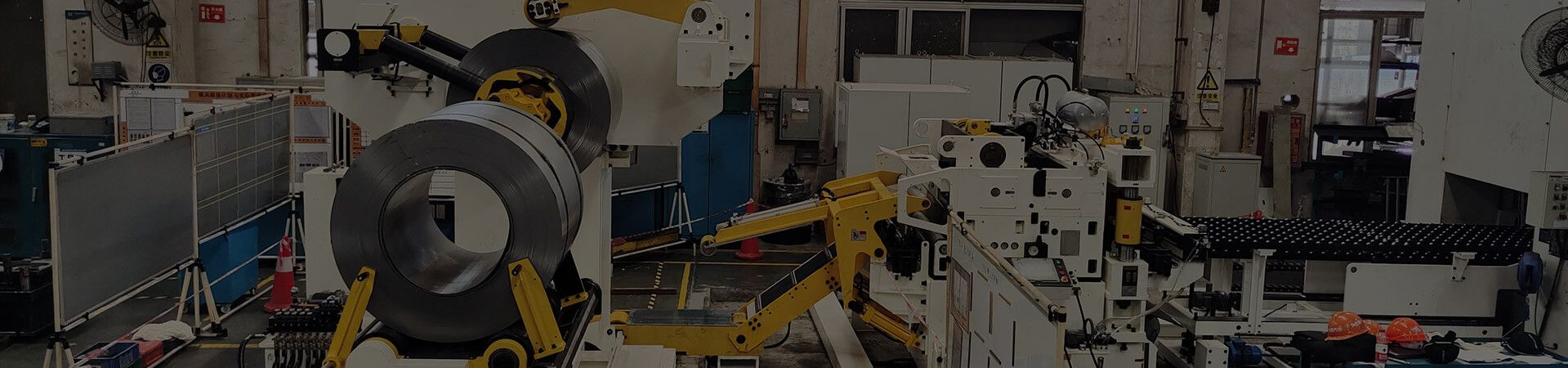
A decoiler straightener feeder is an integrated machine used in metal processing and manufacturing lines that automatically unwinds coiled metal, flattens out material irregularities, and then precisely feeds it into subsequent machinery, such as a stamping press or laser cutter. This 3-in-1 system optimizes the production process by streamlining material handling and eliminating manual labor.
Core Components and Function
The system works through the seamless integration of three main components:
Decoiler: This section holds the large, heavy metal coil (e.g., steel or aluminum) and unwinds the material in a controlled manner. It uses a motorized mandrel and tension control mechanisms (like a press arm or pneumatic brakes) to prevent the material from releasing too quickly or becoming tangled.
Straightener: As the metal strip is uncoiled, it often has bends, curls, or distortions from being tightly wound. The straightener uses a series of precision rollers (sometimes with back-up rollers for thick materials) to apply pressure and systematically flatten these irregularities, ensuring the material is perfectly flat and smooth before further processing.
Feeder: The final component is responsible for accurately feeding the now flat material into the next production stage at a consistent speed and length. Modern machines typically use high-precision servo motors and encoder feedback systems to achieve high feeding accuracy, which is crucial for precise manufacturing operations like stamping or punching.
What industries commonly use decoiler straightener feeders?
Decoiler straightener feeders (often called 3-in-1 coil feed lines) are essential in industries that require high-volume, precision metal stamping or fabrication from coiled material. By 2025, these systems have become standard for "lean" manufacturing due to their space-saving design and high automation.
Commonly served industries include:
1. Automotive Manufacturing
The largest user of these systems, employing them to produce a vast range of vehicle components.
Applications: Body panels, chassis parts, bumpers, seat brackets, brake pads, and structural reinforcements.
Material: High-strength steel and aluminum coils.
2. Home Appliances ("White Goods")
Manufacturers use integrated feeders to produce sheet metal housings and internal parts for household machines.
Applications: Refrigerator shells, washing machine drums and door frames, microwave oven brackets, and air-conditioner components.
3. Electronics and Electrical Equipment
The electronics industry relies on these machines for the high-speed, precise feeding of thin gauge materials.
Applications: Metal housings for phones and computers, server cabinets, connectors, terminals, and motor housings.
4. Construction and Building Materials
Used to process heavier gauge metals into structural components and profiles.
Applications: Metal roofing sheets, wall panels, structural beams (C/Z purlins), window frames, and cladding plates.
5. Furniture and Hardware
These machines produce diverse metal hardware and structural frames.
Applications: Desk frames, drawer slides, cabinet parts, hinges, and braces.
6. Aerospace and Defense
A sector requiring extreme precision and the handling of specialized alloys.
Applications: Aircraft structural parts, engine components, and satellite technology hardware.
7. Renewable Energy
Increasingly important in 2025 for the mass production of green energy infrastructure.
Applications: Solar panel frames, support brackets, and components for electric vehicle (EV) motors and charging stations.
What are some trends in decoiler straightener feeder technology?
The latest generation of feeders is defined by deep Industry 4.0 integration, focusing on autonomous operation and eco-efficiency:
AI-Powered Adaptive Control: Machine vision and learning algorithms now analyze material flatness in real-time, automatically adjusting roller penetration and back-up support to compensate for variations in thickness and yield strength.
Predictive Maintenance Ecosystems: IoT sensors monitor not just motor health but also vibration signatures, bearing temperatures, and load cycles. This data enables predictive maintenance alerts, preventing unplanned downtime before failures occur.
Eco-Efficiency Systems: Leading brands deploy regenerative drive systems that convert deceleration energy back into the power grid, reducing net energy consumption by up to 50% compared to traditional drives.
Advanced Material Readiness: Machine frames and roller assemblies are now reinforced to handle the higher stresses of Advanced High-Strength Steels (AHSS) and ultra-high-strength alloys with tensile strengths exceeding 700 MPa.
What are the best brands of decoiler straightener feeder machines in 2025?
In 2025, the market for decoiler straightener feeder machines features robust international competition, with brands like the U.S.-based COE Press Equipment leading in high-end, heavy-duty applications and Chinese manufacturers such
as Sunrui Machinery excelling in cost-effective, precise, and compact solutions.
Leading International Brands
COE Press Equipment: This U.S. manufacturer is highly regarded in North America for its durable, heavy-duty coil processing lines and customized servo feed controls, suitable for a wide range of metal stamping applications. They are known for long-lasting, reliable performance with thick and wide materials.
Tomac: A reputable UK-based manufacturer known for its robust and compact 2-in-1 and 3-in-1 machines. Tomac equipment is often praised for its ease of use and reliability in various production environments.
Colt Automation: Operating since 1965, this brand is a key North American supplier of both integrated systems and modular components for conventional lines, known for their focus on durability and innovation in handling various steel types.
Braner USA: A global leader in high-performance coil processing systems, specializing in precision slitting, leveling, and multi-blanking lines, with over 1,000 installations worldwide.
Recommended Chinese Brand: Sunrui Machinery
Sunrui Machinery stands out as a leading and professional manufacturer from China, known for producing accurate, cost-effective, and durable press automation equipment. They offer a strong combination of price competitiveness and advanced features for a global market.
Cost-Effectiveness: Sunrui machines offer performance comparable to some imported brands but often at two-thirds of the cost.
Precision and Quality: Their systems, like the MFL series (e.g., MFL4 for 0.6-6.0mm materials), ensure high accuracy in feeding (as precise as ±0.1mm) due to features like robust roller construction and integrated control systems.
Ergonomic and Compact Design: Sunrui prioritizes space-saving and user-friendly designs that are easy to integrate into existing production lines, requiring less floor space compared to traditional setups.
Versatility: Their product lines are versatile, handling materials from standard steel and aluminum to high-strength steels, meeting the needs of automotive, appliance, and construction industries.
After-Sales Service: Sunrui provides flexible after-sales service and remote diagnostics, ensuring higher system availability and reduced downtime.
These articles highlight the top brands in decoiler straightener feeder machines for 2025, detailing their strengths in precision, cost-effectiveness, and automation capabilities.
The Strategic Choice: 3-in-1 Integrated vs. Modular Coil Lines
The choice between an integrated system and a traditional modular line is not about superiority, but optimal application fit.
Key differentiators include:
| Feature | 3-in-1 Integrated Feeder | Traditional Modular Line |
|---|---|---|
| Footprint & Space | Extremely compact; can save 40-50% floor space by eliminating loop pits and long transfers. | Significantly larger; requires space for separate units, loop accumulators, and often pits. |
| Control & Synchronization | Unified control via a single PLC; ensures perfect synchronization between functions. | Multiple independent controls; precision depends on the tuning of loop controls and separate drives. |
| Operational Precision | Inherently high; driven by a synchronized system, ideal for high-speed, continuous runs. | Variable; can be excellent but requires meticulous setup; better suited for extremely long, single feeds. |
| Flexibility & Scalability | Best for dedicated, high-volume production. | Inherently modular; allows for custom layouts and easier replacement/upgrade of individual components. |
For traditional modular setups, brands like Colt Automation, Press Room Equipment Co., and Braner USA remain top choices for operations that prioritize layout flexibility or have specialized, existing infrastructure.
Conclusion: Making the Strategic Investment
As we advance through 2025, the strategic shift toward integrated Decoiler Straightener Feeders is unequivocal. They represent a future-proof investment, directly addressing the core mandates of modern manufacturing: reducing footprint, elevating output quality, and embracing sustainable, intelligent operations.
The final decision hinges on a comprehensive analysis of your production volume, material portfolio, required precision, and total cost of ownership. Whether your path leads to the seamless integration of a 3-in-1 system or the tailored flexibility of a modular line, the technology available in 2025 delivers unprecedented levels of precision and energy efficiency to power your next decade of production.
Ready to engineer your competitive advantage? The future of your press room begins with this critical choice.